
Fair Wear and Tear vs. Damage: What Every Landlord Should Know in 2026
Fair Wear and Tear vs. Damage: What Every Landlord Should Know in 2026
It’s one of the biggest causes of confusion — and disputes — between landlords and tenants: what counts as fair wear and tear, and what counts as damage? With the Renters’ Rights Act now law and deposit adjudicators expecting clear evidence, understanding the difference has never been more important.
What does “Fair Wear and Tear” actually mean?
Simply put, fair wear and tear refers to the gradual deterioration of a property or its contents through normal, everyday use. It’s what happens naturally as people live in a property — carpets flatten, walls fade, hinges loosen.
“Damage”, on the other hand, is avoidable harm — things that result from neglect, misuse, or accidents that go beyond normal use. Knowing the difference helps landlords make fair, lawful deductions at the end of a tenancy.
Examples: wear and tear vs. damage
| Wear & Tear | Damage |
|---|---|
| Slight scuffs on skirting boards | Deep scratches or dents from moving furniture |
| Carpet flattening in high-traffic areas | Burns, stains or torn carpet |
| Faded paint from sunlight | Crayon marks or holes in walls |
| Loose door handle through use | Broken handle from force or neglect |
| Minor wear on worktops | Chipped or scorched surfaces |
Why it matters more in 2026
The Renters’ Rights Act and the upcoming Decent Homes Standard have changed expectations for both landlords and tenants. With no-fault evictions gone, landlords must justify deductions using evidence — not assumptions. That means condition records at move-in and move-out are key.
Deposit scheme adjudicators now rely heavily on high-quality, independent evidence. Reports produced by a third party carry far more weight than self-written notes or casual photos.
For example, The Tenancy Deposit Scheme (TDS) advises that adjudicators consider:
- The property’s age and quality
- The length of the tenancy
- The number and type of occupants
- The condition at check-in and check-out
How a professional inventory helps
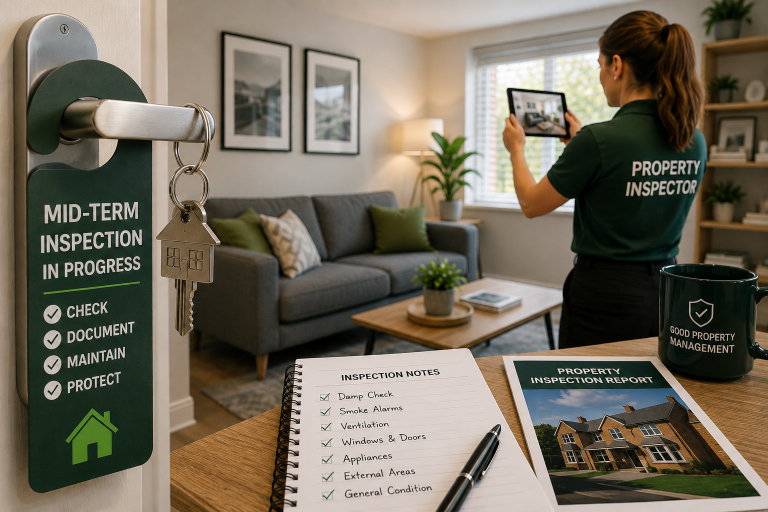
Professional inventory reports take the guesswork out of what’s “fair”. They include:
- Dated, high-resolution photographs for every room and item
- Detailed written condition notes and cleanliness levels
- Check-in and check-out comparisons to show genuine deterioration
- Independent neutrality accepted by deposit schemes and letting agents
Cleaning: a frequent grey area
Cleaning is the top cause of disputes. If a property was cleaned to a professional standard before move-in, tenants are expected to return it the same way. Booking end of tenancy cleaning through an independent company ensures both sides are aligned and documented.
Protect yourself in 2026
With stricter standards and tenants more aware of their rights, having a clear, photographic record is the best protection a landlord can have. A professional inventory not only avoids costly disputes but also supports compliance with all new legislation.
Need help? estateServices Inventories provides independent inventories, check-in and check-out reports, end of tenancy cleaning, and EPCs across Surrey, Berkshire and Hampshire.
Protect your property from costly deposit disputes
Book a professional, photographic inventory today — trusted by landlords and letting agents across the South East.
Book Now