
The Ultimate 2026 Landlord Compliance Guide
The private rented sector is changing fast. For landlords, 2026 is not just another year of managing tenancies, arranging repairs and collecting rent. It is a year where compliance, evidence and professional documentation matter more than ever.
Between the Renters’ Rights Act, the proposed Decent Homes Standard, increasing attention on damp and mould, and tighter expectations around deposit evidence, landlords need to be more organised, more proactive and better protected.
The good news is that staying compliant does not need to be complicated. The landlords who will be best prepared in 2026 are not necessarily the ones with the biggest portfolios. They are the ones who keep the right records, carry out the right inspections, and can clearly prove what condition their property was in at each stage of the tenancy.
Why 2026 is such an important year for landlords
For many years, property management could be fairly informal, especially for smaller landlords. A quick walk-through, a few photos on a phone and a basic tenancy agreement may once have felt enough.
That approach is becoming increasingly risky.
Tenants are more aware of their rights. Deposit schemes expect clear evidence. Letting agents are under pressure to show professional processes. Local authorities are likely to pay closer attention to property standards. And with the Renters’ Rights Act changing how tenancies operate, landlords need to make sure their paperwork and property records are fit for purpose.
This guide is designed to help landlords understand what matters most and where professional reporting services can make the biggest difference.
1. The Renters’ Rights Act: what landlords need to understand
The Renters’ Rights Act represents one of the biggest reforms to the private rented sector in decades. Although parts of the new system are being introduced in stages, the overall direction is clear: tenants will have stronger protections, and landlords will need stronger evidence.
The most talked-about change is the end of Section 21 “no-fault” evictions. This means landlords can no longer rely on the old system of asking tenants to leave without giving a specific reason. Instead, landlords will need to use valid grounds where they need possession.
For responsible landlords, this does not mean they cannot manage their property properly. But it does mean that records, timelines and evidence become much more important.
The Act also brings more focus onto property standards, fairness, transparency and tenant protection. For landlords, the safest approach is to assume that every tenancy should be professionally documented from start to finish.
2. Why documentation is now your strongest protection
When a dispute happens, memory is rarely enough. A landlord may remember the property being spotless at move-in. A tenant may remember it differently. An agent may have notes, but they may not be detailed enough. This is where proper documentation becomes essential.
Good records help answer the most important questions:
- What condition was the property in before the tenant moved in?
- Was the property clean, safe and ready?
- Were meter readings and keys recorded?
- Were any defects already present?
- Did the property change during the tenancy?
- Was damage caused, or is it fair wear and tear?
- Was damp, mould or maintenance reported and followed up?
- Are proposed deposit deductions supported by evidence?
Without clear records, even a genuine claim can become difficult to prove.
This is why professional inventories, check-in reports, mid-term inspections and check-out reports are no longer just admin. They are part of a landlord’s protection strategy.
3. Professional inventories: the foundation of the tenancy
A professional inventory is one of the most important documents a landlord can have. It records the condition, cleanliness and contents of the property before the tenant moves in.
It should not be a rushed checklist. A strong inventory should be detailed, photographic and easy to compare against at the end of the tenancy.
A good inventory will usually include:
- Room-by-room descriptions.
- High-quality photographs.
- Cleanliness notes.
- Condition of walls, floors, doors and windows.
- Fixtures, fittings and appliances.
- Furniture and contents, where applicable.
- Meter readings.
- Keys, fobs and access devices.
- Smoke alarm and carbon monoxide alarm observations where relevant.
The purpose is simple: to create a reliable baseline.
If there is no baseline, it becomes much harder to prove what changed during the tenancy. This can weaken deposit claims, complicate disputes and create unnecessary arguments between landlords, tenants and agents.
At Estate Services Inventories, our professional inventory reports are designed to give landlords and agents a clear, independent record from day one.
4. Why independent inventories are stronger than doing it yourself
Some landlords complete inventories themselves to save money. That can seem sensible at first, especially for smaller portfolios. But if a dispute arises, the quality and independence of the report can become very important.
An independent inventory clerk brings neutrality. They are not the landlord, not the tenant and not emotionally involved in the outcome. That makes the report more credible if it needs to be relied on later.
Independent reports also tend to be more consistent. A professional clerk knows what to photograph, how to describe condition, what areas are commonly disputed and how to structure the report so it is easy to follow.
This matters because vague wording can cause problems. Phrases such as “good condition”, “a bit marked” or “needs cleaning” are often not enough. A stronger report explains exactly what was seen, where it was seen, and includes clear photographic support.
DIY inventory risk
Can appear biased, may miss important details and may not include enough photographic evidence.
Independent inventory benefit
Neutral, structured, photographic and far easier to rely on if a dispute arises later.
5. Check-in reports: setting the standard from day one
A check-in report confirms the condition of the property at the point the tenant takes possession. It works alongside the inventory and helps set expectations clearly.
This is especially important where cleanliness is concerned. Cleaning is one of the most common causes of deposit disputes, so it is essential that the standard at move-in is properly recorded.
A strong check-in should confirm:
- The property condition at handover.
- The standard of cleaning.
- Meter readings.
- Keys and access devices supplied.
- Any agreed comments or observations.
- Photographic evidence of key areas.
If the property is professionally cleaned before the tenant moves in, the invoice should be retained and the standard should be reflected in the report. This becomes very useful if the property is returned in a poorer condition at check-out.
A check-in also gives tenants a fair opportunity to review the report and raise any comments within the agreed period. This helps avoid confusion later because both parties have had the chance to confirm the starting point.
6. Mid-term inspections: the underrated compliance tool
Many landlords understand the importance of inventories and check-outs, but mid-term inspections are often overlooked. In 2026, that could be a mistake.
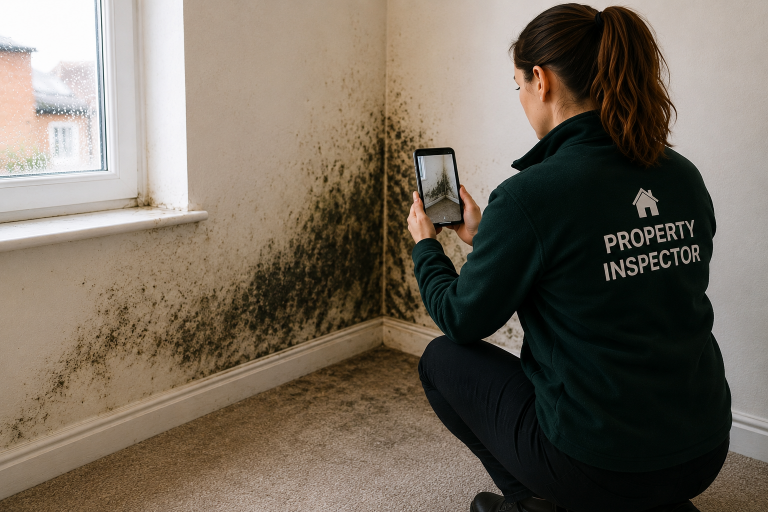
A mid-term inspection is a structured visit carried out during the tenancy. It is not about catching tenants out. It is about checking the property is being looked after, identifying maintenance issues early and keeping a record of property condition.
Mid-term inspections are useful for spotting:
- Damp and mould.
- Leaks or water staining.
- Ventilation problems.
- Blocked extractor fans.
- Damage or neglect.
- Garden issues.
- Unauthorised alterations.
- General maintenance concerns.
They also give tenants an opportunity to report issues properly. Sometimes tenants live with problems without raising them, especially if they are unsure who is responsible or worried about being blamed. A professional inspection creates a neutral moment to record concerns and recommend action.
7. How often should landlords carry out mid-term inspections?
There is no one-size-fits-all answer. The right frequency depends on the property, the tenancy, the tenant history and the landlord’s risk level.
As a general guide:
- A first inspection within the first few months can be useful for new tenancies.
- Six-monthly inspections are common for many standard rental properties.
- Older properties, HMOs or homes prone to damp may need more frequent checks.
- Long-term tenants in well-maintained homes may require fewer visits.
Access must always be arranged properly, respectfully and with suitable notice. The inspection should be documented, and any follow-up action should be recorded.
You can read more in our guide to mid-term inspections.
8. The start-to-middle evidence timeline
The strongest landlords build a timeline of evidence across the tenancy. This makes it much easier to understand what happened and when.
Inventory, cleaning standard, safety checks and meter readings recorded.
Tenant receives a clear report and starting condition is confirmed.
Mid-term inspections record condition, maintenance concerns and follow-up actions.
This timeline becomes extremely valuable at check-out. It shows not only the start and end condition, but also whether issues were spotted and managed during the tenancy.
That is the difference between reactive property management and professional property management.
Coming next in Part 2
Part 2 of this guide will cover check-out reports, deposit disputes, damp and mould documentation, Awaab’s Law, the Decent Homes Standard and EPC compliance.
Start every tenancy with stronger evidence
Book a professional inventory, check-in or mid-term inspection and give your property the documentation it needs for 2026.
9. Check-Out Reports: Where Evidence Becomes Essential
If the inventory establishes the starting point of the tenancy, the check-out report establishes the finishing point.
This is often the most important report a landlord will receive because it forms the basis of any claim against a tenant’s deposit.
A professional check-out compares the property directly against the original inventory and check-in report, identifying any differences in condition, cleanliness or contents.
The report should clearly highlight:
- Changes in cleanliness standards.
- Damage to fixtures and fittings.
- Missing items.
- Maintenance concerns.
- Garden condition.
- Meter readings.
- Key returns.
The most effective reports use side-by-side comparisons supported by detailed photography.
10. Deposit Disputes: Why Some Claims Succeed and Others Fail
Deposit disputes remain one of the most common areas of disagreement between landlords and tenants.
Many landlords are surprised to discover that being correct about damage or cleaning does not automatically guarantee a successful claim.
Deposit adjudicators rely on evidence.
Where evidence is weak, incomplete or missing, even legitimate claims can fail.
What evidence carries the most weight?
- Professional inventories.
- Check-in reports.
- Check-out reports.
- Date-stamped photographs.
- Invoices and quotations.
- Cleaning receipts.
- Contractor reports.
- Tenant correspondence.
The stronger the evidence trail, the stronger the landlord’s position becomes.
Common reasons landlords lose disputes
- No inventory report.
- Poor quality photographs.
- Vague descriptions.
- No evidence of cleaning standards.
- Missing invoices.
- Failure to prove condition at move-in.
You can read our dedicated guide here:
How the Renters’ Rights Act Impacts Deposit Disputes
11. Damp & Mould: One of the Biggest Risks Facing Landlords
Few property issues have received more attention in recent years than damp and mould.
What was once viewed primarily as a maintenance issue is now increasingly seen as a health and safety issue.
This means landlords need to take concerns seriously and maintain clear records of inspections, reports and remedial action.
Common warning signs include:
- Black mould growth.
- Condensation on windows.
- Musty odours.
- Peeling paint.
- Water staining.
- Damp patches.
- Damaged plaster.
Early intervention is usually significantly cheaper than major remedial works later.
Professional inspections help create an audit trail showing when issues were identified and what action was taken.
12. Understanding Awaab’s Law
Awaab’s Law emerged following the tragic death of two-year-old Awaab Ishak, whose exposure to mould in social housing highlighted the serious risks associated with poor property conditions.
The legislation places greater emphasis on timely responses to hazards including damp and mould.
Although initially focused on social housing, its principles are influencing wider expectations across the rental sector.
Landlords should view Awaab’s Law as an indicator of where housing standards are heading.
This means:
- Taking reports seriously.
- Investigating promptly.
- Documenting inspections.
- Keeping maintenance records.
- Recording communication with tenants.
- Following up remedial works.
The ability to demonstrate action may become just as important as the action itself.
13. The Decent Homes Standard
The proposed extension of the Decent Homes Standard into the private rented sector represents another major shift in expectations.
The standard focuses on ensuring homes are:
- Safe.
- Warm.
- Free from serious hazards.
- In a reasonable state of repair.
- Equipped with modern facilities.
While implementation continues to evolve, landlords should already be considering how their properties measure up.
Particular attention should be given to:
- Damp and mould.
- Heating systems.
- Ventilation.
- Electrical safety.
- Kitchen condition.
- Bathroom condition.
- General repair standards.
Mid-term inspections and professional inventories provide useful evidence that properties are being monitored and maintained.
14. EPCs and Energy Efficiency
Energy Performance Certificates remain one of the most important compliance documents for landlords.
As energy costs continue to influence tenant decision-making, EPC ratings are becoming increasingly significant.
An EPC provides information about:
- Energy efficiency.
- Environmental impact.
- Running costs.
- Recommended improvements.
Landlords should ensure their EPC remains valid and understand what improvements may be required in future.
Common recommendations include:
- Improved insulation.
- LED lighting.
- Heating upgrades.
- Hot water efficiency improvements.
- Window improvements.
Properties with stronger EPC ratings are often easier to let, more attractive to tenants and potentially better prepared for future regulatory changes.
Learn more about our professional EPC service:
Energy Performance Certificates (EPCs)
Where We Are So Far
By this point in the guide we’ve covered:
- Renters’ Rights Act.
- Documentation.
- Inventories.
- Check-ins.
- Mid-term inspections.
- Check-outs.
- Deposit disputes.
- Damp and mould.
- Awaab’s Law.
- Decent Homes Standard.
- EPC compliance.
All of these work together to create a stronger, safer and more compliant tenancy.
Coming Next in Part 3
In the final section we’ll cover floor plans, end of tenancy cleaning, landlord compliance checklists, and provide a complete action plan for staying compliant throughout 2026 and beyond.
15. Floor Plans: More Than Just a Marketing Tool
Many landlords think of floor plans purely as a marketing feature used by estate agents. While they certainly help prospective tenants understand a property’s layout, they also offer practical benefits throughout the tenancy lifecycle.
A professional floor plan can help:
- Provide clarity on room layouts.
- Reduce misunderstandings regarding property size.
- Support inventory reporting.
- Improve marketing quality.
- Enhance tenant expectations before move-in.
- Create a more professional property file.
As landlords increasingly move towards digital documentation and professional reporting systems, floor plans form part of a wider evidence package that supports transparency and professionalism.
Learn more about our professional floor plan services.
16. End of Tenancy Cleaning: The Most Common Cause of Deposit Disputes
If there is one issue that appears more frequently than almost any other in deposit disputes, it is cleaning.
Many disagreements arise because the expected standard was never properly documented at the start of the tenancy.
Landlords often assume a property should be returned in the same condition. Tenants may believe a quick clean is sufficient. Without evidence, it can become difficult to establish what standard should have been achieved.
This is why cleaning should be considered from day one.
A professional inventory and check-in report should record:
- Overall cleanliness levels.
- Kitchen condition.
- Bathrooms.
- Flooring.
- Appliances.
- Windows.
- Furniture (where applicable).
Where professional cleaning has been carried out before the tenancy begins, retaining invoices and recording the condition within the inventory creates valuable evidence should deductions become necessary later.
Professional end of tenancy cleaning can help:
- Reduce disputes.
- Speed up re-letting.
- Improve presentation.
- Meet agent expectations.
- Protect landlord investments.
Learn more about our end of tenancy cleaning services.
17. Building a Landlord Compliance System
The most successful landlords do not rely on memory. They rely on systems.
A structured compliance process reduces risk, improves tenant relationships and creates a clear audit trail if questions arise later.
Think of compliance as a timeline rather than individual tasks.
EPC, safety certificates, floor plans and property preparation.
Inventory, professional cleaning, check-in arrangements and documentation.
Mid-term inspections, maintenance records, communication logs and issue tracking.
Check-out report, cleaning assessment, deposit evidence and property preparation for the next tenancy.
When landlords follow a structured process, compliance becomes easier and disputes become less frequent.
18. Your Ultimate 2026 Landlord Compliance Checklist
Before the Tenant Moves In
- ✅ EPC in place and valid.
- ✅ Gas Safety Certificate obtained.
- ✅ Electrical safety requirements met.
- ✅ Smoke alarms checked.
- ✅ Carbon monoxide alarms checked where required.
- ✅ Property professionally prepared.
- ✅ Inventory completed.
- ✅ Floor plan available.
- ✅ Check-in arranged.
- ✅ Meter readings recorded.
During the Tenancy
- ✅ Mid-term inspections completed.
- ✅ Damp and mould monitored.
- ✅ Maintenance requests documented.
- ✅ Repairs recorded.
- ✅ Tenant communication retained.
- ✅ Safety issues addressed promptly.
At the End of the Tenancy
- ✅ Check-out report completed.
- ✅ Property cleanliness assessed.
- ✅ Photographs updated.
- ✅ Meter readings recorded.
- ✅ Keys accounted for.
- ✅ Deposit deductions supported by evidence.
- ✅ Invoices and quotations retained.
19. The Future of Property Compliance
Looking ahead, it is clear that property compliance is moving in one direction: greater accountability, stronger evidence requirements and higher expectations around standards.
Landlords who embrace professional reporting, inspections and digital record keeping will be better positioned to adapt to future changes.
Those who continue to rely on informal processes may find compliance increasingly difficult.
The good news is that most of the tools landlords need already exist.
Professional inventories, check-ins, check-outs, inspections, EPCs and cleaning services all contribute towards creating a complete compliance framework.
Final Thoughts
Landlord compliance can sometimes feel overwhelming, particularly as legislation evolves and expectations increase.
However, most compliance challenges can be simplified by focusing on a few key principles:
- Document everything.
- Inspect regularly.
- Maintain promptly.
- Communicate clearly.
- Keep professional records.
When those foundations are in place, landlords can protect their properties, reduce disputes and provide better homes for tenants.
The result is not only improved compliance but a smoother, more professional tenancy experience for everyone involved.
Need Help Staying Compliant in 2026?
Estate Services Inventories provides professional inventories, check-ins, check-outs, mid-term inspections, EPCs, floor plans and end of tenancy cleaning throughout Surrey, Berkshire and Hampshire.
Whether you manage one property or an entire portfolio, we can help you build a stronger compliance framework and protect your investment.